
The Situation
The field had been planted to triticale and was harvested in May, producing approximately two dense big
round bales per acre. After harvest, the field moved toward a summer sorghum-sudangrass planting. The
post-harvest period included substantial rain, with enough water movement in the area to destroy water
gaps and move trees.
That makes the water movement story especially important: water that infiltrates can support crop
growth; water that runs off to the bar ditch does no good for the root zone.
Program Used
| Timing | Product / practice | Rate / notes |
|---|---|---|
| June 15 burndown | WEX® | 1 qt/ac; applied with burndown spray program |
| June 15 burndown | Glyphosate | 32 oz/ac |
| June 15 burndown | 2,4-D | 1 pt/ac |
| Friday, July 3 | Amplify-D® | 2 oz/50 lb seed |
| Friday, July 3 | Sudan grass planting | 25 lb/ac |
Rainfall and Timeline
| Date / timing | Event | Observation value |
|---|---|---|
| May | Triticale harvested | About two dense big round bales/ac |
| June 15 | Burndown: glyphosate + 2,4-D + WEX® | WEX® ahead of multiple rains |
| June 15 to planting | 2 to 3 inches rain, plus one unmeasured event | Water movement / infiltration story |
| Friday, July 3 | Planted at 25 lb/ac; 0.20 inch rain that evening | Establishment window |
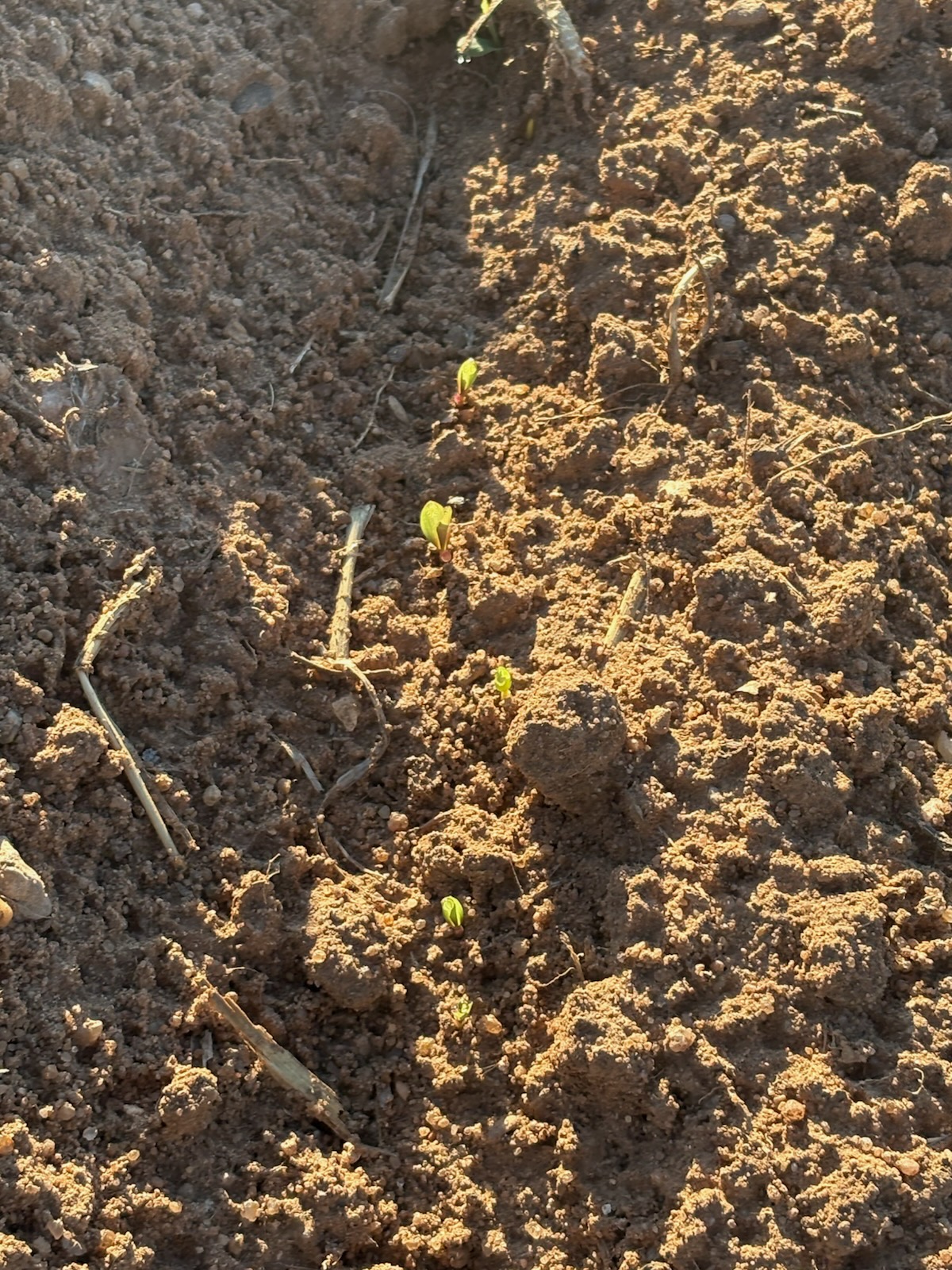
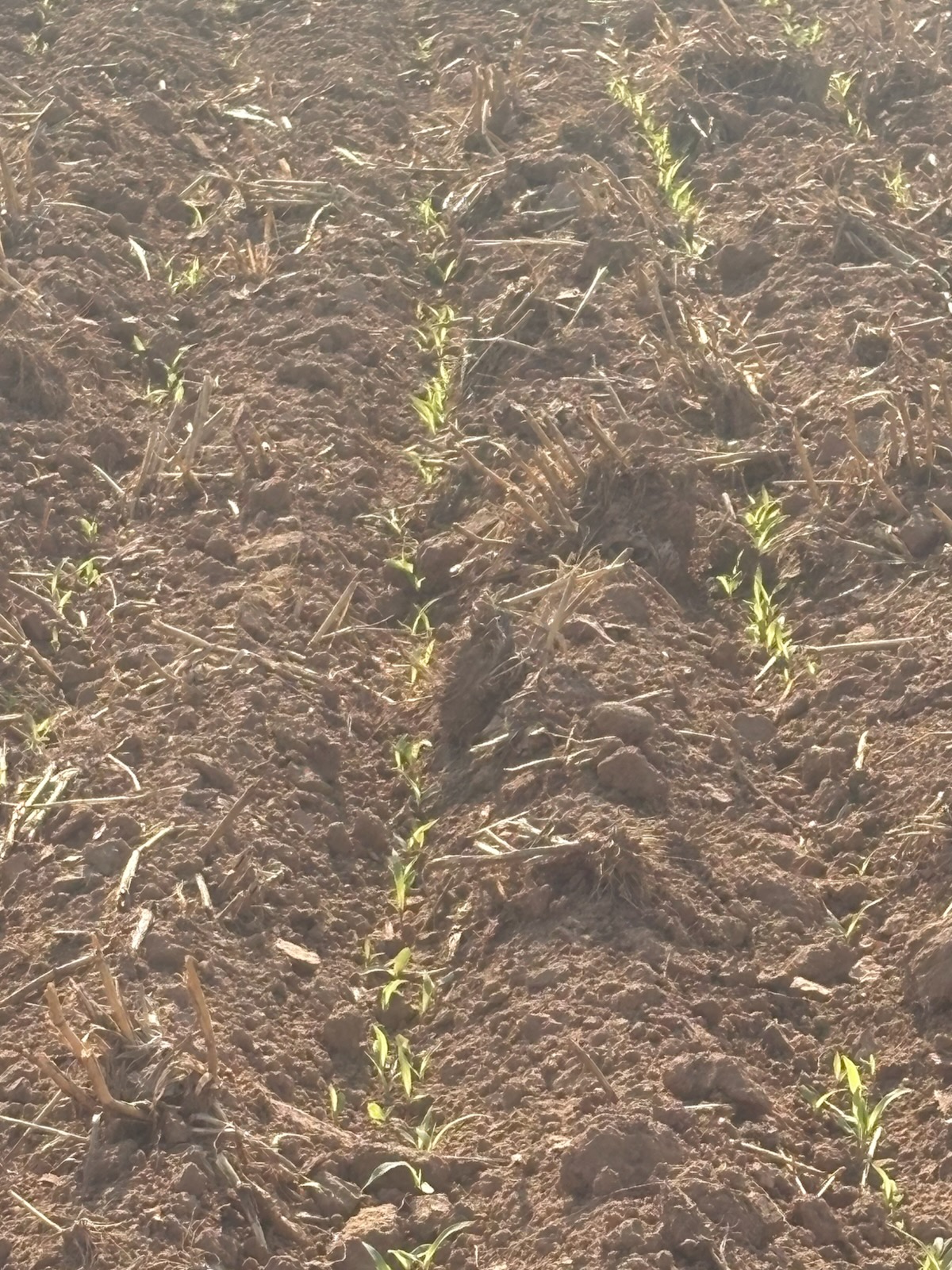
| Tuesday, July 7 | Emergence observed | Fast emergence |
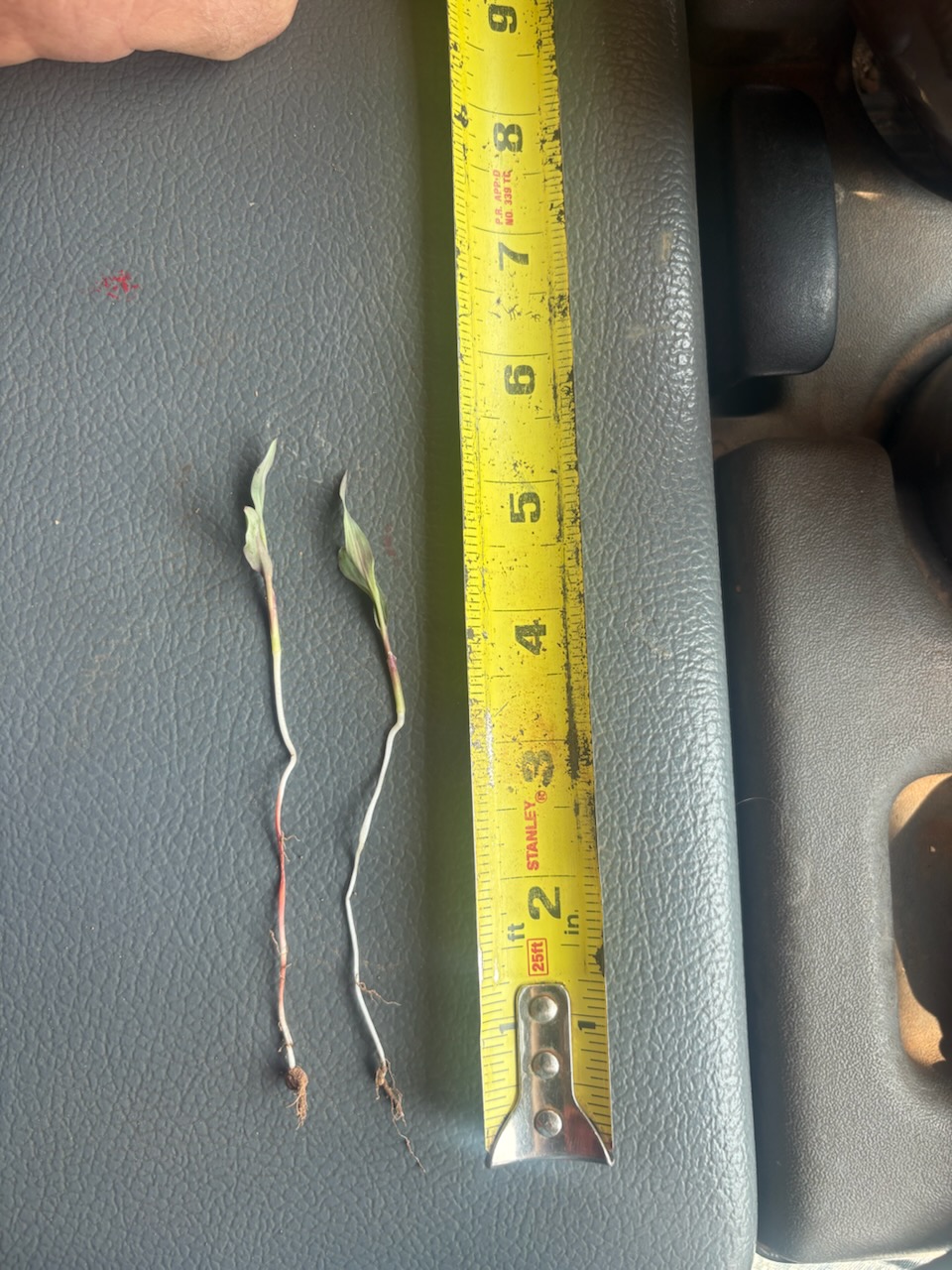
| Wednesday, July 8 | Plants dug and photographed | Early root activity |
What Was Observed
Water movement: Jerad observed water moving down into the soil profile instead of across the field toward the bar ditch.
Emergence: the Triple Sweet sorghum-sudangrass hybrid was planted Friday and visible emergence was
observed by Tuesday.
Early root activity: plants dug the following Wednesday showed roots extending beyond visible top growth.
Heat-period follow-up: on Sunday, July 19, Jerad reported the crop had received no additional rain since
emergence and was still holding color during extreme heat.
System story: WEX® in the burndown pass, Amplify-D® on the seed, rainfall, fast emergence, early root
activity, and later heat-period observations fit together as an establishment story.
Photo Documentation
Better Farm Crops Takeaway
The practical takeaway from this field observation is that establishment starts below the soil surface. The
above-ground stand matters, but water movement, early root activity, and how the crop handles the first
stretch of heat and dry weather are just as important.
In this field, WEX® was included in the burndown pass ahead of multiple rain events, and Amplify-D®
was used on the seed before planting. The crop emerged quickly, showed early root activity, and
continued holding color during a later heat-period check with no additional rainfall after emergence. That
is the kind of early establishment story worth documenting and following through harvest.
This observation will remain open as Jerad continues to monitor the field through hay harvest. Future
updates may include additional root checks, stand photos, forage growth, cutting timing, and final hay
production.
Field Observation Note
This report is based on grower-supplied information and photos. There was no untreated seed check or
nearby untreated comparison. This should be presented as a field observation, not a replicated trial or
proof of product performance. Results may vary by field, weather, soil type, timing, and management.